Nano Banana 2.1
Nano Banana 2.1 is Google’s October 6, 2026 stable Gemini image-generation model, identified by gemini-nano-banana-2.1. It replaces Nano Banana 2 in the API; the predecessor gemini-3.1-flash-image is scheduled to shut down on October 29.
Why it matters
Existing Nano Banana 2 integrations have a dated migration target. New projects can compare the current model’s resolution, reference-image limits and actual request cost before relying on a consumer product name or assuming an old API ID remains available.
Model ID, limits and modalities
Use gemini-nano-banana-2.1. Google lists 131,072 input tokens and 32,768 output tokens, with text, image, video and PDF input and image/text output. Image generation supports 1K, 2K and 4K; the older 512px option is not supported. Video input does not mean video output.
Reference images and editing
The model supports up to 14 references, including up to four characters and ten objects. Google documents web and image-search grounding and conversational editing. Use representative inputs to check text accuracy, character consistency and factual content; a generated diagram can contain mistakes.
A published workflow example
Google publishes this English photosynthesis illustration beside an image-generation and iterative-editing workflow. Its current code targets Nano Banana 2.1, but the saved image’s exact backend is not independently verified. Treat it as a publisher-provided example, not evidence that 2.1 outperforms another model.
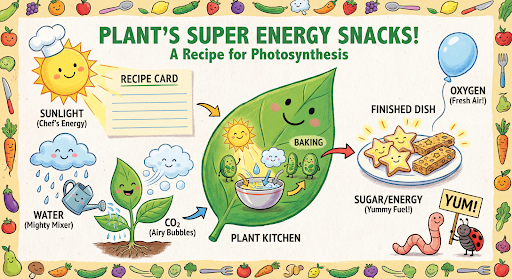
Google documentation example: an English photosynthesis illustration. Saved-image backend unverified; not a controlled model comparison.
Standard and batch prices
Standard API input is $1.50 per million tokens; text/thinking output is $7.50 and image output $30 per million tokens. Listed square-image equivalents are $0.0336 at 1K, $0.0504 at 2K and $0.0756 at 4K. Batch token rates are half the standard rates. Input, thinking and grounding can add charges; these image equivalents are not a fixed total request price.
Migrate before the predecessor shuts down
Google’s October 6 changelog gives gemini-3.1-flash-image an October 29 shutdown and recommends Nano Banana 2.1. Recheck model selection, output sizes, reference handling, grounding charges and response parsing. This API migration does not establish that every Gemini consumer app or third-party host has changed.
Useful first jobs
- Generate images with readable labels and reviewed facts.
- Edit a visual through a conversation.
- Use reference images for a character or product workflow.
- Migrate an existing Nano Banana 2 API integration.
Frequently asked questions
What is the Nano Banana 2.1 API model ID?
Use gemini-nano-banana-2.1. Nano Banana 2 used gemini-3.1-flash-image, which Google schedules to shut down on October 29, 2026.
Does Nano Banana 2.1 generate video?
No. Google lists image and text output. Video is a supported input, which is a different capability.
Is $0.0336 the total cost of a 1K image request?
No. It is Google’s listed standard image-output equivalent. Input tokens, text/thinking output and chargeable search grounding can add to the request cost.
Sources and evidence
Google’s API changelog establishes the release and retirement dates. Its model page controls limits and modalities, and its pricing page controls API rates. Quality and consistency improvements are Google claims; the documentation example below illustrates a workflow rather than an independent comparison.
- Nano Banana 2.1 model ↗
Google · Primary source
- Gemini API changelog ↗
Google · Primary source
- Gemini API pricing ↗
Google · Primary source
- Image generation guide ↗
Google · Primary source